

Guide To Moving House With Kids
A Parent's Survival Guide: How to Make Moving House with Kids a Positive Adventure Moving h... Read More
Moving house is a mammoth task, but some items on the checklist are bigger and more daunting than others. Right at the top of that list is the refrigerator. It’s heavy, awkward, and surprisingly delicate. One wrong move and you could be looking at a damaged floor, a strained back, or a very expensive, non-chilling metal box.
But don't panic! With the right preparation and technique, moving your fridge can be a straightforward and safe process. Many moving companies offer specialised services for large appliances, but with the right approach, you can also handle it yourself. This comprehensive guide will walk you through every step, from defrosting to plugging it back in at your new home.
Success lies in preparation. Trying to wing it with a fridge is a recipe for disaster. Before you even think about moving it, make sure you have the right equipment on hand.
Here’s what you’ll need:
Follow these steps precisely to ensure a safe and successful move for you, your floors, and your refrigerator.
This is the most important prep step and it needs to be done well in advance. Plan to start this process at least 24 hours before moving day.
Moving a dirty fridge is not pleasant. Once it’s defrosted, give the entire interior a good clean with warm, soapy water or a food-safe cleaner. Wipe down the exterior and don't forget the dusty condenser coils on the back. A clean fridge will prevent mould and bad odours from developing during transit.
A swinging door can cause serious damage or injury.
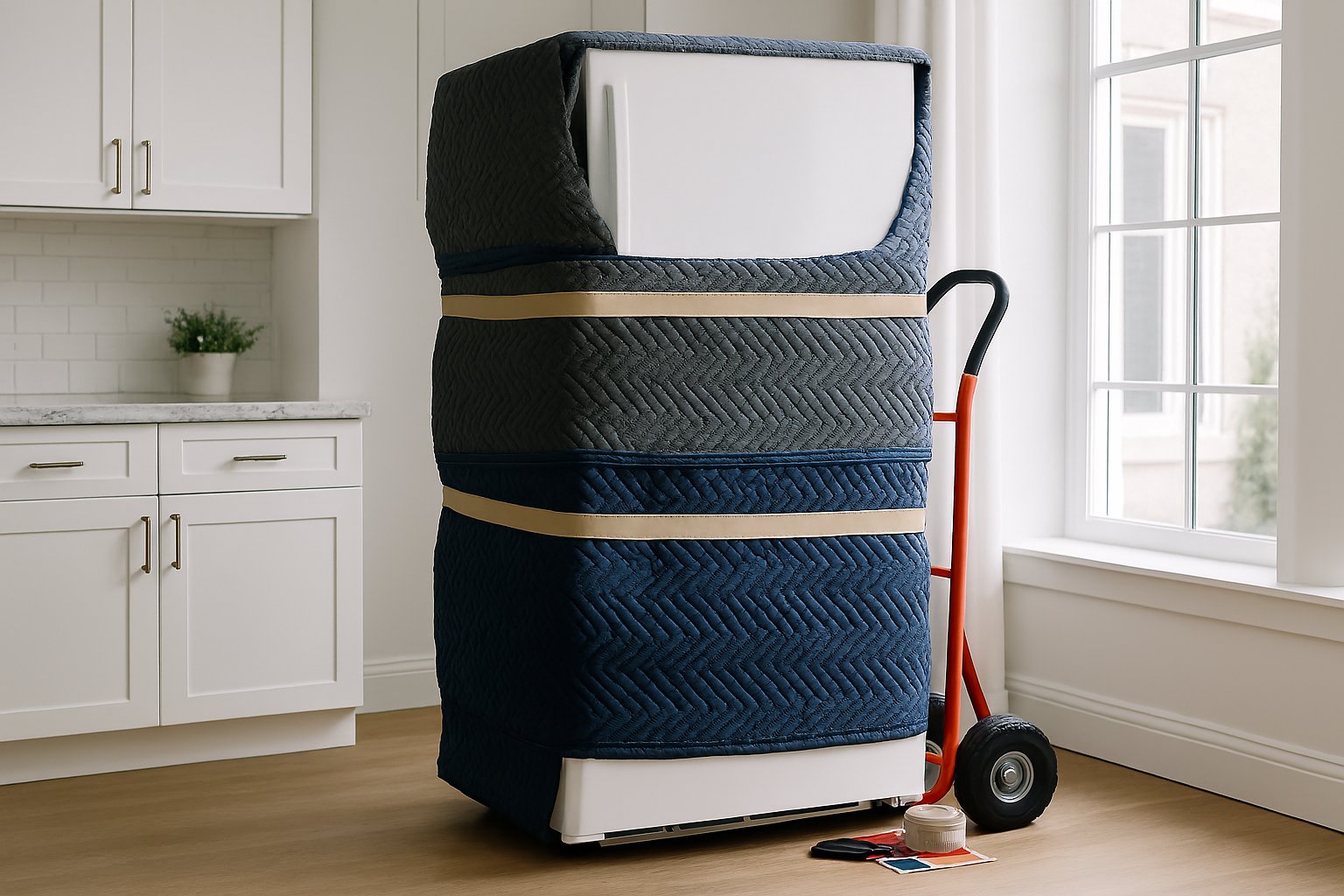
Wrap the entire refrigerator in moving blankets. This will protect it from scratches and cushion it against bumps into walls and door frames. Secure the blankets with packing tape, making sure the tape doesn’t stick directly to the fridge's surface.
This is where your helper is crucial.
With one person guiding and pulling the trolley from the back (tilted at about a 45-degree angle) and the other spotting at the front, carefully navigate your way out.
Always, always, always keep the refrigerator upright during transport.
Laying a fridge down, especially on its back or front, can cause the compressor oil to run into the cooling lines. This can permanently damage the unit.
Secure the fridge in an upright position in the moving truck or ute, wedged against a wall and strapped in place so it cannot tip over.
You’ve made it! But you’re not done yet.
You should avoid this at all costs. The golden rule is to keep a fridge upright at all times. Laying it down allows oil from the compressor to flow into the refrigerant lines, which can block them and cause permanent damage when you turn it back on. If you have absolutely no other choice, lay it on its side (never the back), and make sure you stand it upright for at least 24 hours before plugging it in.
The minimum safe waiting time is 4 hours if it was kept mostly upright. This gives the fluids inside plenty of time to settle back into the compressor where they belong. If you're unsure or know it was tilted significantly, waiting 24 hours is the safest bet.
No. Refrigerators are extremely heavy and awkward. Attempting to move one alone is a serious risk for personal injury and for damaging the appliance and your home. Always have at least one strong helper.
Yes, absolutely. A fridge that isn't defrosted can leak water all through the moving truck and into its own electrical components. The trapped moisture can also lead to mould and mildew during transit.
While highly unadvisable, if you're in a real bind, you can use furniture sliders under the fridge's feet to slide it across a flat surface. For lifting, you and a few helpers can use purpose-built lifting straps. However, an appliance trolley is by far the safest and most effective tool for the job.
A Parent's Survival Guide: How to Make Moving House with Kids a Positive Adventure Moving h... Read More

Proper packing and moving are very essential in many cases such as if you got a transfer or you nee... Read More

A Guide to Commercial Relocation in Perth Commercial relocation comes with a lot of responsibilities... Read More